
What to Know Before Building a Custom Home in Cherokee County
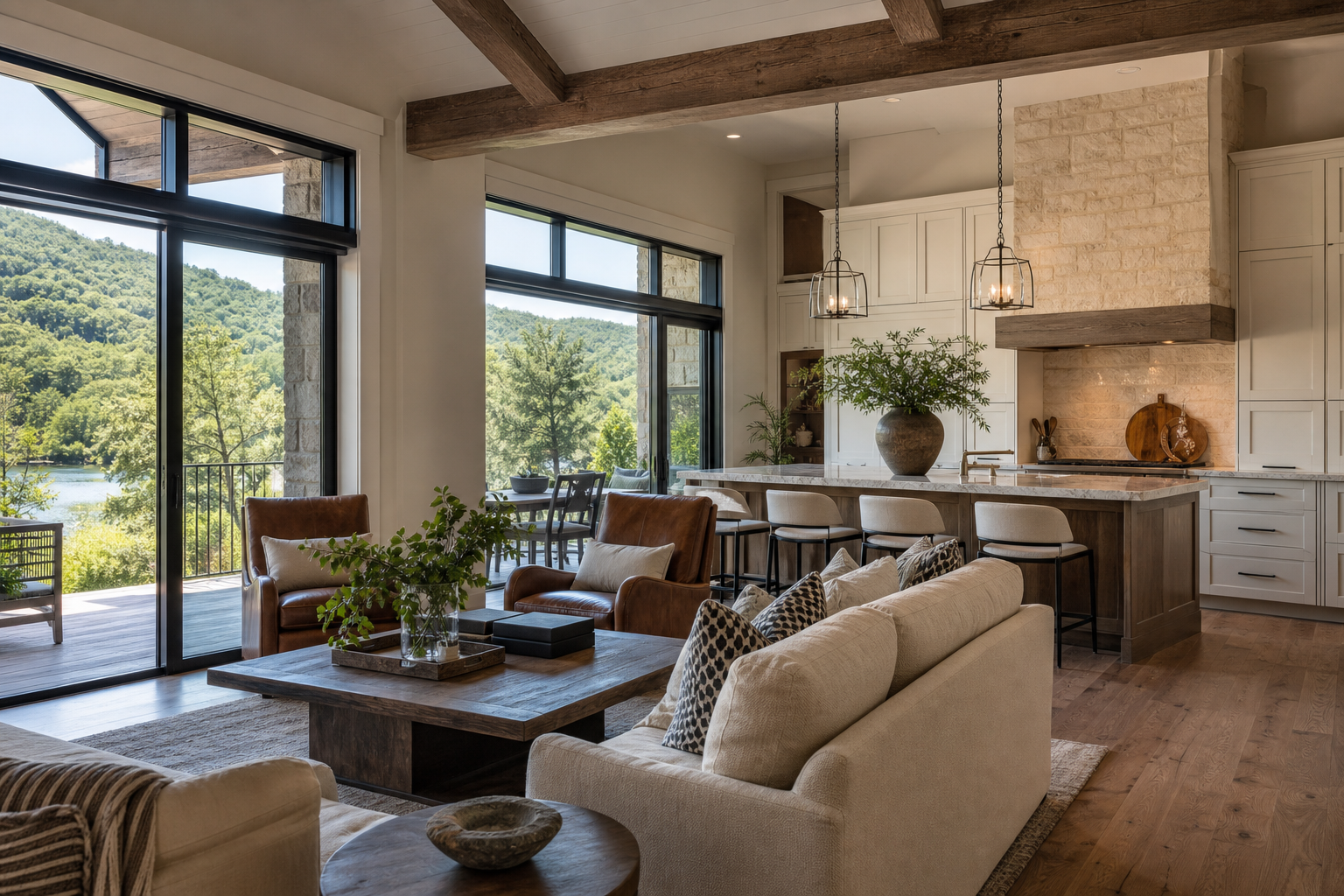
Cherokee County remains one of North Metro Atlanta's most active custom home corridors, with 342 higher-value permits logged through mid-2026, pacing ahead of 2025. Buyers can personalize layouts, finishes, and sustainability features, but success depends on choosing the right builder, engaging a Georgia real estate attorney early, and understanding the full cost picture before breaking ground.
Is Cherokee County a good place to build a custom home in 2026?
Cherokee County is one of the strongest custom home markets in North Metro Atlanta. Despite a broader normalization in total permit activity, the higher-value construction segment is pacing ahead of last year as of mid-2026, with 342 upper-tier permits logged through Q2 alone. That means an active ecosystem of builders, designers, and trades who are experienced with custom and semi-custom work, and a market that rewards personalization.
Key Takeaways
- Cherokee County logged 342 higher-value permits through Q2 2026, pacing ahead of the 540 recorded for all of 2025, according to a mid-year 2026 construction overview from HBWeekly.
- The county recorded 1,484 total residential permits in 2025, a 13% year-over-year decline, but industry commentary characterizes this as market normalization, not a collapse in demand.
- Recent local market data puts the median sale price in Canton at $527,000 and median days on market at 25, reflecting an active but not frenzied pace.
- Georgia is an attorney-closing state, meaning a licensed real estate attorney handles the closing on your custom home, including deed preparation and transfer tax filings.
- The permit slowdown may actually work in your favor: builders have more capacity to focus on quality and customization than during peak-boom years.
Why are buyers choosing to build custom in Cherokee County right now?
The honest answer is simple: resale inventory in Cherokee County is finite. Recent local market data shows 735 active listings across the area, with 252 new listings in the last 30 days. That sounds like decent selection until you factor in how many buyers are searching for something specific, whether that's a multigenerational floor plan, a dedicated home office, an outdoor kitchen, or a primary suite on the main level. Resale rarely checks every box.
Building custom lets you define the box entirely.
Cherokee has been one of the more active new-construction corridors in North Metro Atlanta for years. According to Atlanta Regional Commission data, the county recorded 1,796 single-family permits in 2024, placing it ahead of Forsyth County and making it one of the busiest build markets in the region. That volume supports a deep bench of local builders, architects, and trades who are experienced with upper-tier projects.
And while total permits have pulled back, the higher-value segment is holding up well. A January 2026 metro Atlanta construction overview from HBWeekly reported 540 higher-value permits in 2025. The most recent mid-year 2026 update from the same source shows 342 such permits through Q2 alone, which paces ahead of where 2025 finished at that same point in the year. The custom and luxury segment is not retreating; it's running.
What the permit slowdown actually means for you
Cherokee County has posted year-over-year permit decreases of 10-19% for three consecutive years, according to the mid-year 2026 HBWeekly report. That sounds concerning on the surface. In practice, it means less of the frantic pace that defined 2021 and 2022, when builders were stretched thin and change orders were a nightmare.
Today, builders in Cherokee have more bandwidth to focus on individual projects. Timelines are more predictable. If you want to personalize a home at a high level, this is a better environment than peak-boom years. The Federal Reserve's FRED series on Cherokee County building permits confirms the county authorized 2,665 new private housing structures in 2024, the most recent full-year figure available, which underscores that Cherokee's construction pipeline remains substantial even as it normalizes.
What should you focus on when designing and building a custom home in Cherokee County?
Floor plan and lifestyle fit
The most common mistake I see buyers make when building custom is treating the floor plan as an afterthought. You spend months picking countertops and cabinet hardware, then realize the kitchen doesn't flow the way you actually live. Start with how your household functions day to day, then design around that.
In Cherokee County, the higher-value buyer cohort tends to prioritize a few specific features: main-level primary suites, dedicated home offices (not a converted bedroom), covered outdoor living spaces, and multi-car garages. These aren't trends; they're practical responses to how people in this market actually use their homes. If you're considering a new construction home in Cherokee or Forsyth County, understanding what the builder's standard package includes versus what's a true custom option will save you significant frustration.
Sustainability and energy efficiency
Georgia's climate makes energy performance a genuine financial consideration, not just a marketing checkbox. Hot, humid summers put real pressure on HVAC systems. Buyers in the higher-value segment are increasingly asking for high-SEER HVAC units, enhanced insulation packages, low-E windows, and better air sealing as part of the base spec rather than upgrades. These choices reduce long-term utility costs and improve comfort in ways you'll notice every day.
Some energy-efficiency improvements may also qualify for federal or utility-level incentives. I'd encourage you to check current program availability with your builder and a tax advisor, since these programs change. The smart home upgrades that add value in Georgia are increasingly tied to energy performance, not just aesthetics.
Builder selection and contract review
Choosing the right builder is the single most consequential decision in a custom build. Not every builder who operates in Cherokee County has the same process, communication style, or track record with high-spec finishes. Ask for references from clients who built at a similar price point. Walk completed homes. Understand how they handle change orders, what their allowances cover, and what happens if the project runs over schedule.
More importantly: have a Georgia real estate attorney review your construction contract before you sign anything. Georgia is an attorney-closing state, and a licensed attorney is the professional who handles the closing on your new home, including deed preparation, transfer tax computation, and filing. But their value starts well before closing day. A builder contract is a complex document with real financial exposure in the change-order and warranty clauses. Getting an attorney involved early is one of the best investments you can make in a custom build.
Understanding cost categories without surprises
I won't publish a cost breakdown here, because the real number depends entirely on your lot, your spec level, your builder, and the timing of your project. What I will tell you is the categories to budget for beyond the base construction contract: lot acquisition and site prep, architectural and design fees, permit fees, utility connections, landscaping, and closing costs when the deed records. On the closing side, Georgia's real estate transfer tax applies when the deed is recorded. The rate is set by O.C.G.A. § 48-6-1 and administered by the Georgia Department of Revenue. Whether the buyer or seller pays it is a negotiated contract term, not a statutory mandate, so confirm the allocation in your specific agreement.
Every custom build is different, and the only way to know what your project will actually cost is to sit down with your builder and run through the numbers line by line. That's a conversation I help my clients prepare for before they ever meet with a builder.
How Cherokee compares to other North Metro Atlanta markets
If you're weighing Cherokee against other areas, here's a snapshot of recent area-level market data across North Metro Atlanta (trailing approximately 90 days as of September 2026):
| Area | Median Sale Price | Median Days on Market |
|---|---|---|
| Canton | $527,000 | 25 |
| Milton | $1,161,442 | 69 |
| Alpharetta | $775,000 | 33 |
| Marietta | $510,000 | 19 |
| Kennesaw | $398,000 | 35 |
| Holly Springs | $440,000 | 59 |
Cherokee's Canton market sits at a $527,000 median with homes moving in 25 days, which reflects a healthy, active pace. Milton's median of over $1.1 million reflects a more established luxury corridor with longer marketing times. For buyers who want the custom home experience at a more accessible entry point, Cherokee offers a compelling combination of lot availability, builder ecosystem, and price positioning relative to its neighbors.
Your specific situation, lot, spec level, and timeline will drive the real numbers. That's exactly the kind of analysis I walk my clients through before they commit to a direction.
Frequently Asked Questions
Is Cherokee County a good place to build a custom home compared to other North Metro Atlanta areas?
Cherokee County is one of the strongest custom home markets in North Metro Atlanta, supported by an active builder ecosystem and consistent demand for higher-value product. With 1,796 single-family permits in 2024 and a higher-value segment that is pacing ahead of last year in 2026, the county offers more builder options and lot availability than more land-constrained markets like Alpharetta or Milton, while still delivering the lifestyle and proximity to Atlanta that buyers want. The tradeoff is that Milton and Alpharetta carry higher median sale prices, which can support a higher resale ceiling for luxury custom builds.
How busy is new construction in Cherokee County right now, and does that affect custom build timelines?
Total permit activity in Cherokee County has declined 10-19% year-over-year for three consecutive years, according to the mid-year 2026 HBWeekly construction report, which characterizes this as normalization rather than a market collapse. For custom home buyers, this is actually favorable: builders have more capacity to focus on individual projects, and timelines tend to be more predictable than during the peak-boom years of 2021-2022. The higher-value segment specifically is pacing ahead of 2025, so experienced custom builders are still actively staffing and pursuing upper-tier work.
What should I look for when choosing a custom home builder in Cherokee County, GA?
The most important factors are the builder's track record with projects at your specific price point and spec level, their process for handling change orders and allowances, and their communication during the build. Ask for references from recent clients, walk completed homes, and understand the warranty terms before signing. Have a Georgia real estate attorney review the construction contract before you commit, since builder contracts carry real financial exposure in the fine print that most buyers don't catch until it's too late.
How does Georgia's real estate transfer tax work when I close on a new construction home?
Georgia imposes a real estate transfer tax when a deed is recorded, governed by O.C.G.A. § 48-6-1 and administered by the Georgia Department of Revenue. The tax is calculated at closing and reported via Form PT-61, filed with the deed. Georgia law sets the rate but does not specify whether the buyer or seller pays it; that is a negotiated term in your purchase or construction contract, so confirm the allocation with your real estate attorney before closing.
Does the current permit slowdown in Cherokee County mean it's a bad time to start a custom build?
No. The permit slowdown reflects market normalization after a period of exceptional growth, not a retreat in demand for custom and higher-value homes. In fact, the higher-value permit segment in Cherokee County logged 342 permits through Q2 2026, pacing ahead of the same point in 2025, according to HBWeekly's mid-year 2026 report. Less overall volume means builders have more bandwidth for custom work, which typically translates to better focus on your project and more manageable timelines than during peak years.
If you're seriously considering building a custom home in Cherokee County, the next step is a conversation about your specific goals, timeline, and budget before you engage a builder. I work with buyers through every stage of that process, from evaluating lots and vetting builders to navigating the closing with your attorney. Schedule a consultation with Hart Realty Partners and let's map out what building in Cherokee County actually looks like for you.
Equal Housing Opportunity. Greg and Jacquee Hart are licensed real estate agents in the state of Georgia (License: Agent), affiliated with Hart Realty Partners at 1 Look Real Estate, regulated by the Georgia Real Estate Commission. This article is general information only and does not constitute legal, tax, or financial advice. Confirm all costs, tax obligations, and contract terms with your real estate attorney, tax advisor, or lender before making any transaction decisions.
