
What do buyers need to know about new construction in Cherokee and Forsyth Counties?
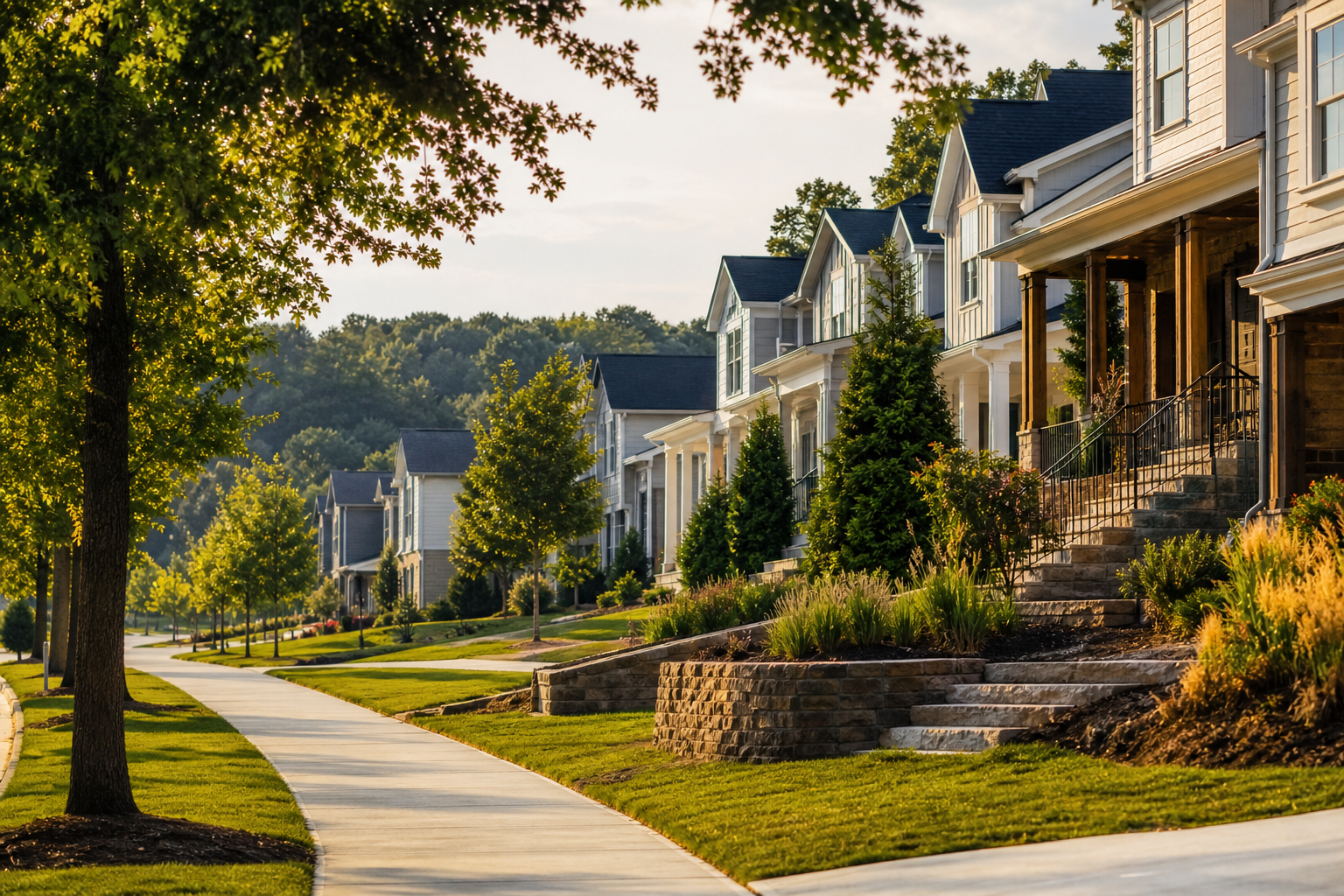
New Construction in Cherokee & Forsyth: What Buyers Need to Know.
Cherokee and Forsyth Counties are among the most active new-construction markets in North Metro Atlanta in 2026. Buyers here get modern amenities, growing communities, and access to strong school districts, but the process differs meaningfully from buying resale. Georgia's attorney-closing requirement, builder-drafted contracts, and county-specific inspection steps all require a strategy before you put earnest money down.
I've walked a lot of buyers through new-construction purchases in Woodstock, Canton, Holly Springs, and Cumming. The excitement of picking your finishes is real, but so are the risks if you go in without the right guidance. Here's what you need to know.
Why Cherokee and Forsyth Are Booming Right Now
The growth numbers tell the story. Cherokee County's population grew from roughly 254,500 in 2020 to an estimated 284,000 by 2024, that's nearly 30,000 new residents in four years, and the trend hasn't slowed. Forsyth County has followed a similar trajectory, with new subdivisions pushing west toward Lake Lanier and south along GA-400.
That growth is infrastructure-driven as much as lifestyle-driven. Both counties offer relatively direct commuter routes to major North Metro job centers, Perimeter, North Fulton, and Midtown, via I-575 and GA-400, a point the Atlanta Regional Commission consistently highlights as a key engine of residential demand in this corridor.
On the national rate backdrop: the Realtor.com 2026 Housing Forecast projects average 30-year mortgage rates around 6.3% for the year, with national home prices up roughly 2.2%. A mid-year check-in from USA TODAY / Address USA puts 30-year fixed rates in the 5.98%–6.75% range over the past 52 weeks, with prices in the U.S. South essentially flat, up just 0.2% year-over-year. That's a more balanced environment than 2021 or 2022, and it gives buyers in Cherokee and Forsyth real negotiating room with builders, especially on incentives and upgrades.
Nationally, a Realtor.com Housing Market Update from July 2026 pegs the median listing price around $428,950, down 2.4% year-over-year, with roughly 1 in 5 active listings seeing price reductions. An Altos Research mid-summer 2026 analysis notes median list price per square foot is about 2% below a year earlier, with inventory expected to plateau through late summer and peak around October. For buyers in Cherokee and Forsyth, that national softening translates to builders being more willing to negotiate on closing cost contributions and design upgrades, particularly when you're not using their in-house lender.
Where the New Construction Is Happening
In Cherokee County, the hottest corridors are Woodstock, Holly Springs, Canton, and Ball Ground. Woodstock and Holly Springs draw buyers with revitalized downtowns, walkable streetscapes, and trail access through the Noonday Creek and Greenprints systems, all within a short drive of I-575. Canton and Ball Ground appeal to buyers who want more land without sacrificing commute viability.
In Forsyth County, West Forsyth is the growth story right now, newer schools, larger move-up homes, and easy access to Cumming and Lake Lanier. Communities along GA-400 routinely market smart-home technology, energy-efficient construction, swim/tennis facilities, and clubhouse amenities, per current Forsyth County new-construction listings. The Forsyth County School District is consistently ranked among Georgia's top public systems, and the Cherokee County School District reports strong performance metrics and continued enrollment growth tied directly to residential development. School district performance is a legitimate demand driver here, and it supports long-term resale value.
For a deeper comparison of how new construction stacks up against resale in this market, see our post on new construction vs. resale in Canton, GA and what 2026 builder incentives mean for buyers.
The Georgia-Specific Process You Can't Skip
Here's where a lot of buyers get tripped up, especially those relocating from states where closings work differently.
Georgia Is an Attorney-Closing State
In Georgia, real estate closings must be overseen by a licensed attorney. The State Bar of Georgia and the Georgia Supreme Court have both held that conducting a residential closing, including preparing the deed and related documents, constitutes the practice of law. That means you're not closing at a title company the way buyers do in many other states. You're closing at a law office.
In most financed transactions, the buyer chooses the closing attorney. In some builder-drafted contracts, the builder designates their preferred attorney. I tell my buyers to treat attorney selection as a negotiable point and to push back if the builder's contract locks in an attorney you haven't vetted. The closing attorney works for the transaction, not exclusively for you, so having your own attorney review the builder contract beforehand is smart due diligence.
Builder Contracts Are Not Standard GAR Forms
When you buy from a builder, you're signing their contract, not the standard Georgia Association of REALTORS® form. Builder contracts are written to protect the builder. Pay close attention to provisions on earnest money (often non-refundable after a short window), construction delay clauses, change order costs, and warranty limitations. I strongly recommend having the contract reviewed by the closing attorney or a separate real estate attorney before you sign anything.
The Georgia Real Estate Transfer Tax
Georgia imposes a real estate transfer tax on every deed recorded, calculated at $0.10 per $100 (or fractional part) of the purchase price under O.C.G.A. § 48-6-1, administered by the Georgia Department of Revenue. The rate itself is fixed by statute. Who pays it, builder or buyer, is commonly negotiated between the parties, and your contract should spell that out clearly. Don't assume either side automatically covers it; confirm it in your agreement.
Disclosures and Inspections on New Construction
Here's something buyers often don't expect: builders sometimes decline to sign the standard Seller's Property Disclosure form, substituting their own builder-specific disclosures covering grading, drainage, HOA details, and construction specifications. Georgia case law recognizes liability for fraudulent concealment of known material defects, so even without the standard form, builders and their agents carry legal exposure if they knowingly hide significant issues. That's the legal backdrop the Georgia Association of REALTORS® uses to advise agents in Cherokee and Forsyth to push for written documentation from builders.
County inspectors and builder quality-control staff will examine the home at multiple phases, but that's not a substitute for your own independent inspector. I tell every new-construction buyer I work with to hire a third-party home inspector for both a pre-drywall inspection and a pre-closing walk-through. You want eyes on the framing, mechanicals, and insulation before the walls go up. The Georgia Department of Community Affairs Building Codes Division enforces statewide building codes based on the International Residential Code, and Cherokee and Forsyth County building departments handle permitting and inspections locally, but those inspections protect the public minimum standard, not your specific interests as a buyer.
Georgia also requires a certificate of occupancy from the county before you can close and move in. That CO is issued after all final inspections pass. Build that into your timeline expectations.
The New-Construction Sequence in Cherokee and Forsyth
Lot selection and contract signing, builder contract, earnest money deposit (terms vary significantly by builder)
Financing approval and design selections, structural options, interior finishes, upgrades; keep copies of every addendum and change order
Construction phases, foundation, framing, mechanicals, all subject to county permitting and inspections
Pre-drywall inspection, optional but strongly recommended; hire your own inspector
Pre-closing walk-through and punch list, document everything in writing
Certificate of occupancy issued by Cherokee or Forsyth County
Attorney-conducted closing, transfer tax paid, deed and security deed recorded with the county clerk
One practical note on upgrades: builder incentives and pricing can shift between contract signing and closing. Manage your upgrade selections carefully, keep every signed addendum, and share copies with your closing attorney and lender. I've seen buyers get to closing with a different number than they expected because a change order wasn't documented properly.
If you're also thinking about the HOA side of new-construction community living, our post on Georgia's new HOA law and what Canton and Woodstock buyers need to know covers recent legislative changes that affect master-planned communities directly.
Is New Construction in Cherokee and Forsyth a Good Investment in 2026?
The fundamentals here are solid. Population growth is real and documented. Commuter infrastructure supports continued demand. School districts in both counties drive family relocation decisions that sustain resale value over time. And the 2026 rate environment, while not the sub-4% window of 2020, is more stable and negotiable than the frenzied 2021-2022 market.
The national data showing prices flat to slightly down in the South, combined with builders offering more incentives, actually creates an opportunity for buyers who are prepared. You can negotiate on closing cost contributions, design upgrades, and sometimes lot premiums in ways that weren't possible two years ago. Whether that opportunity is right for your specific situation depends on your timeline, financing, and which communities fit your needs, and that's exactly the kind of analysis I run with every buyer before we walk into a model home.
After closing, don't forget the homestead exemption. It's one of the most straightforward ways to reduce your annual property tax bill in Georgia, and it's easy to miss in the new-construction excitement. Our guide on the Georgia Homestead Exemption for new buyers in Cherokee and Forsyth County walks you through the filing process and deadlines.
Frequently Asked Questions
Is Georgia an attorney-closing state, and what does the closing attorney do in a new-construction purchase?
Yes. Georgia requires that a licensed attorney oversee the closing, prepare the deed, and handle the recording of documents, this is not optional. In a new-construction transaction, the closing attorney reviews the builder's title, prepares the deed and security deed, coordinates payoff of any construction loans, and ensures the transfer tax is paid and all documents are properly recorded with the county clerk. In financed transactions, buyers typically choose the attorney, though some builder contracts designate one, treat that as a negotiable point.
Who pays the Georgia real estate transfer tax in a new-construction deal, the builder or the buyer?
The Georgia transfer tax is calculated at $0.10 per $100 of the purchase price under O.C.G.A. § 48-6-1, and the rate is fixed by state law. Who pays it is commonly negotiated between the buyer and the builder, there is no automatic rule that one party covers it. Your purchase contract should specify the allocation clearly, and you should confirm it with your closing attorney before signing.
Do I get a Seller's Property Disclosure when buying directly from a builder in Cherokee or Forsyth County?
Not always in the standard form. Builders sometimes substitute their own builder-specific disclosures covering grading, drainage, HOA structure, and construction specs instead of signing the Georgia Association of REALTORS® disclosure form. Georgia case law still holds builders and their agents liable for knowingly concealing material defects, so written documentation from the builder, combined with your own independent inspections and the builder's warranty, is your best protection. Ask your agent and closing attorney what disclosures you're entitled to before you sign the contract.
How does buying new construction compare to resale in terms of inspections, warranties, and timelines?
New construction typically comes with a builder warranty (coverage periods and terms vary by builder and should be reviewed carefully), while resale homes rely on the condition at purchase and any seller disclosures. With new construction, you have the opportunity for a pre-drywall inspection and a pre-closing punch-list walk-through, steps that don't exist in a resale transaction. Timelines for new construction are longer and less predictable, often running several months from contract to close depending on construction phase and county permitting. Resale closings in Cherokee and Forsyth typically move faster once you're under contract.
Are new-construction communities in Forsyth and Cherokee a good long-term investment given 2026 interest rates?
The underlying fundamentals support long-term demand: documented population growth, strong school districts, and direct commuter access to major North Metro job centers. The 2026 rate environment, with 30-year fixed rates generally in the 5.98%–6.75% range per mid-year national data, is more balanced than the 2021–2022 peak, and prices in the U.S. South are essentially flat year-over-year, giving buyers more negotiating leverage with builders on incentives and upgrades. Whether a specific community makes sense for your investment goals depends on your timeline, financing, and exit strategy, that's a conversation worth having before you select a lot.
New construction in Cherokee and Forsyth Counties offers a genuine opportunity in 2026, modern homes, growing communities, and builders who are more willing to negotiate than they've been in years. But the process has real complexity, from builder contracts and Georgia's attorney-closing requirement to inspections, disclosures, and transfer tax allocation. Getting those details right is the difference between a smooth closing and an expensive surprise.
If you're considering a new-construction purchase in Canton, Woodstock, Holly Springs, Cumming, or anywhere else in North Metro Atlanta, I'd love to walk you through the process before you sign anything. Schedule a consultation with Greg and Jacquee Hart and let's figure out which communities and builders make the most sense for your goals.
About Greg & Jacquee Hart
Greg and Jacquee Hart are top-producing REALTORS® and co-owners of Hart Realty Partners at 1 Look Real Estate, serving Canton, Woodstock, and North Metro Atlanta. With 10+ years of experience and 100+ homes sold, they help buyers, sellers, and investors navigate the Georgia market with strategy, local insight, and proven results.
Equal Housing Opportunity. Greg and Jacquee Hart are licensed real estate agents in the State of Georgia, regulated by the Georgia Real Estate Commission. This article is provided for general informational purposes only and does not constitute legal, tax, or financial advice. Readers should confirm all costs, contract terms, tax obligations, and legal requirements with their own attorney, tax advisor, lender, or closing officer.