
How to Build a Custom Home in Forsyth County, GA
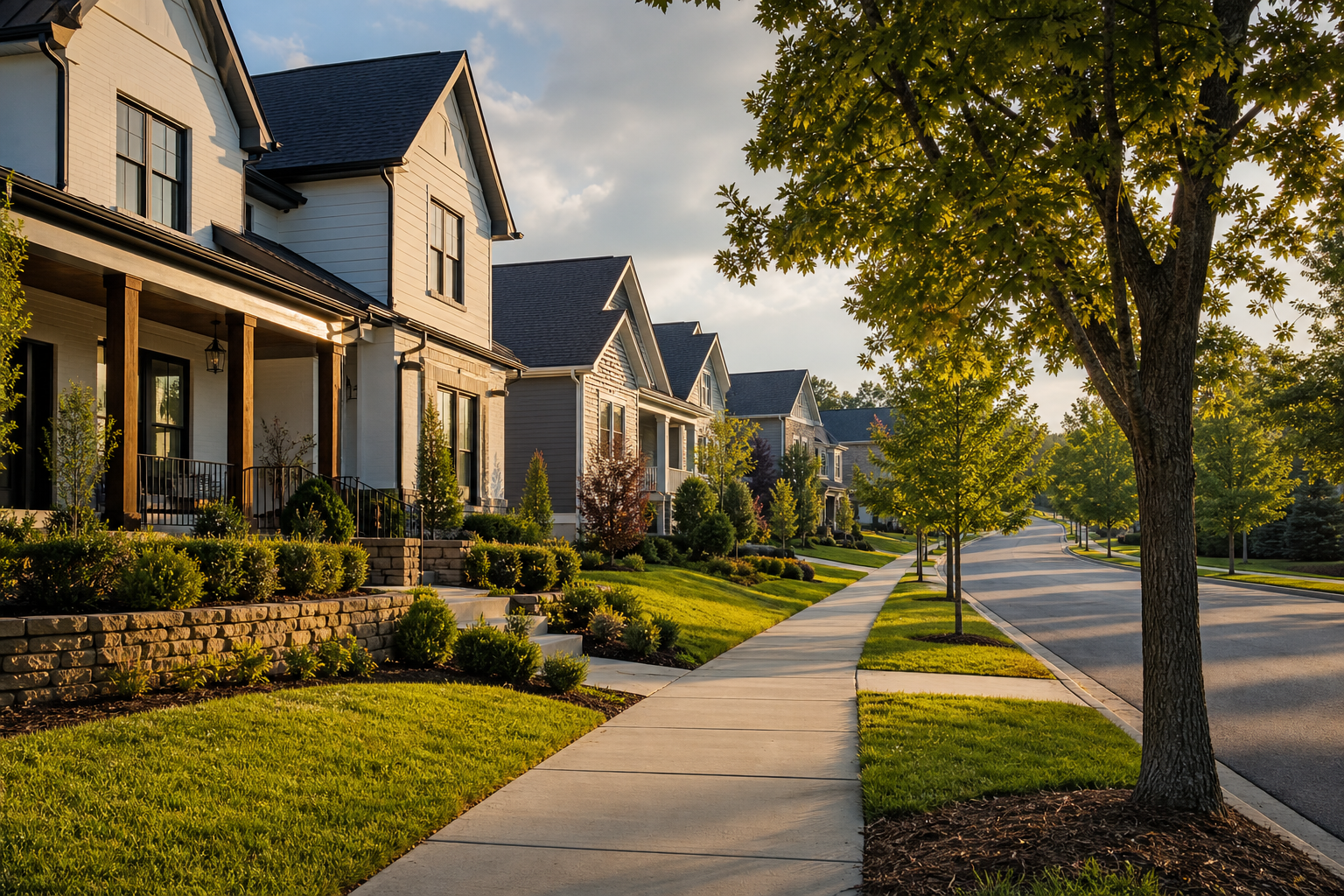
Building a custom home in Forsyth County, GA requires verifying zoning under the Unified Development Code, securing land with a recorded plat, completing septic or sewer approvals, submitting permit documents electronically through the county's CSS portal, and closing with a Georgia real estate attorney who handles deed recording and transfer tax.
How do you build a custom home in Forsyth County, GA?
Building a custom home in Forsyth County means working through a defined sequence: confirming your land's zoning under the county's Unified Development Code, securing an approved recorded plat, completing septic or sewer approvals through Environmental Health, and submitting your Residential New Dwelling permit application electronically through the county's CSS portal. From there, construction moves through required inspections before a Certificate of Occupancy is issued, and a Georgia real estate attorney handles the final closing, deed recording, and transfer tax remittance.
Key Takeaways
- Forsyth County requires all Residential New Dwelling permit applications to be submitted electronically through the county's Customer Service (CSS) portal, per the January 2025 permit checklist.
- Before a building permit is issued on a lot served by on-site septic, Environmental Health approval, based on a soil and perc test, is a required checklist item.
- Forsyth's Unified Development Code divides unincorporated areas into multiple residential zoning districts (Res1, Res2, R1, R2, and others), each with distinct minimum lot sizes, setbacks, and allowable uses that directly affect what you can build and where.
- If your land does not fit current zoning, a formal rezoning process runs through a pre-application meeting, public participation, Planning Commission review, and Board of Commissioners approval before a permit can be pulled.
- Georgia is an attorney-closing state, meaning a licensed real estate attorney handles deed preparation, title, and the remittance of Georgia's statutory real estate transfer tax at closing, not a title company or escrow officer.
Forsyth County is one of the most in-demand places to build in North Metro Atlanta right now. Between Cumming's growth, proximity to Alpharetta and Milton, and a range of available land, from large rural tracts to subdivision lots, it draws buyers who want something built specifically for them rather than whatever inventory is available. If you're weighing the decision, my post on new build vs. resale in North Metro Atlanta walks through how to think about that choice before you commit to either path.
But a custom build in Forsyth is not the same as buying into a builder's subdivision. You're navigating county permitting, zoning compliance, land due diligence, and a construction timeline that depends on decisions you make months before the first shovel goes in. I've walked clients through this process, and the ones who run into delays almost always skipped a step early, usually something in the land phase that surfaces later and costs real time.
Here's the step-by-step process as it actually works in Forsyth County today.
What do you need to do before you can pull a building permit in Forsyth?
The permit is not step one. Everything that happens before the permit application determines whether you can build, what you can build, and how long you'll wait. Skipping ahead to design before you've confirmed zoning and land status is the single most common mistake I see.
Step 1: Confirm zoning and land status
Forsyth County's Planning and Community Development department administers the Unified Development Code (UDC), which divides unincorporated Forsyth into multiple residential zoning districts. The districts most relevant to custom single-family homes include Res1, Res2, Res3, Res4, R1, R2, R1R, R2R, and others, each with its own minimum lot size, setback requirements, allowable uses, and development standards. The UDC has been updated through 2024-2025, so current rules reflect recent policy changes, not older standards.
Before you make an offer on land, pull the zoning designation and confirm that single-family detached residential use is permitted in that district. Also confirm whether the parcel has an approved, recorded plat. The January 2025 Residential New Dwelling permit checklist from Forsyth County Building and Licensing requires a copy of that recorded plat as a submission document. Raw land without an approved plat will need subdivision or plat approval before a permit can be issued, that adds a step you want to know about before you're under contract.
Recent UDC modifications also reference minimum heated square footage requirements in certain districts (for example, 2,000 sq ft in some districts) and restrictions on manufactured homes, so if you have a specific home size in mind, verify that the zoning district allows it.
Step 2: Investigate septic vs. public sewer and site access
Many parcels in Forsyth County are served by on-site septic rather than public sewer. If your lot is one of them, Forsyth County Environmental Health approval, based on a soil and perc test and a septic system design, is a required checklist item before the Residential New Dwelling permit is issued. This is not optional and cannot be done in parallel with permit review; it needs to happen first.
Site access is a parallel consideration. Custom homes on county roads often require a driveway permit or right-of-way approval. Confirm access requirements early so they don't become a surprise during permit review.
Step 3: Address rezoning if the land doesn't fit current zoning
If the parcel's current zoning doesn't allow your intended build, wrong district, wrong density, or a conditional use that requires approval, you'll need to go through Forsyth's formal rezoning or conditional use permit process. That sequence runs: pre-application meeting with Planning and Community Development, a public participation meeting, Planning Commission review, and a final decision by the Board of Commissioners. This process adds significant time before you can even apply for a building permit, so it needs to be identified and initiated as early as possible.
How does the permit application and construction process work in Forsyth?
Once land due diligence is complete and zoning is confirmed, you move into design, permit application, and construction. Each phase has specific county requirements.
Step 4: Develop architectural plans and site plan
The January 2025 Residential New Dwelling permit checklist requires floor plans for each level of the home, including the basement, along with a scaled site plan that meets county residential site plan requirements. These documents need to reflect Georgia's adopted International Residential Code standards and any applicable UDC design requirements for your district, including frontage requirements, setbacks, and open space standards in overlay districts.
Most buyers at this stage work with an architect or a design-build firm that understands Forsyth's specific requirements. Plans that don't meet county standards come back with comments and add time. Getting this right before submission matters.
Step 5: Submit the Residential New Dwelling permit via the CSS portal
As of January 2025, Forsyth County requires all Residential New Dwelling permit applications to be submitted electronically through the county's Customer Service (CSS) portal. Paper submissions are not accepted. The full document package, recorded plat, scaled site plan, floor plans for each level, Environmental Health septic approval (if applicable), and any other checklist items, must be uploaded through the portal.
Whether you're working with a licensed general contractor or managing the project as an owner-builder, the permit process runs through Forsyth Building and Licensing the same way. Owner-builder projects in Georgia typically require an Owner-Builder Affidavit acknowledging responsibility for code compliance and contractor licensing requirements under Georgia Code Title 43, Chapter 41. If you're considering the owner-builder route, confirm the current affidavit requirements with the county directly before submitting.
How long permit review takes depends on the complexity of the project, completeness of the submission, and current county workload. Projects involving subdivision review, overlay districts, or conditional uses will also involve Planning and Community Development review before the building permit is issued, which adds steps. Your specific timeline is something I walk clients through based on their land and project scope, there's no single answer that applies to every site.
Step 6: Construction and required inspections
Once the permit is active, construction can begin. Forsyth County requires inspections at key stages, foundation, framing, mechanicals, and final, before a Certificate of Occupancy is issued. No stage can be covered or closed in before the required inspection passes. The Certificate of Occupancy is the county's confirmation that the home was built to code and is safe to occupy; you cannot legally move in without it.
For larger tracts or projects within master-planned communities, the UDC's Chapter 18 subdivision and land development standards apply, including requirements for undisturbed separation areas and erosion control on projects at or above 25 acres. These affect how the site is graded and how much of the lot remains in a natural state around the home.
How does closing work when you build a custom home in Georgia?
Georgia is an attorney-closing state. That means a Georgia-licensed real estate attorney, not a title company or escrow officer, handles your closing documents, title search, deed preparation, and deed recording in the Forsyth County Superior Court. This applies to custom new construction just as it does to resale transactions.
The attorney also handles the calculation and remittance of Georgia's real estate transfer tax, which is imposed under O.C.G.A. Title 48, Chapter 6 whenever a deed conveying real property is recorded. The tax amount is set by a statutory formula based on the consideration or value of the property, and it is collected by the Superior Court Clerk at recording. The statute applies equally to new construction and resale, the trigger is the deed conveyance itself.
One thing worth knowing: while the transfer tax is fixed by law, who pays it is typically negotiated between the parties in the purchase and sale agreement. Georgia Association of REALTORS® standard forms and closing practice acknowledge that allocation can vary by deal. Don't assume one party automatically covers it, confirm how it's handled in your contract.
After closing, one of the first things to address is your homestead exemption. My post on the Georgia Homestead Exemption in Cherokee and Forsyth County walks through exactly how to apply and what it saves you on property taxes going forward.
For a broader look at what the buying process looks like for new construction specifically, my post on new construction in Cherokee and Forsyth Counties covers what buyers need to know before signing a builder contract.
If you're financing the build, a construction loan works differently from a traditional mortgage, the Consumer Financial Protection Bureau's homeownership resources are a useful starting point for understanding how construction-to-permanent financing works before you talk to a lender. According to NAR research, new construction continues to represent a meaningful share of home sales in high-demand suburban markets, partly because buyers can't find existing inventory that meets their needs, Forsyth fits that pattern exactly.
Here's a quick reference for the market context around Forsyth and the surrounding North Metro Atlanta areas, based on trailing 90-day aggregated data as of September 2026:
| Area | Median Sale Price | Median Days on Market |
|---|---|---|
| Canton | $526,000 | 22 |
| Woodstock | $492,405 | 23 |
| Milton | $1,249,000 | 56 |
| Alpharetta | $792,450 | 44 |
| Roswell | $735,000 | 23 |
| Marietta | $463,250 | 15 |
| Kennesaw | $398,500 | 37 |
| Holly Springs | $435,000 | 42 |
Custom builds in Forsyth often land at price points above the median for surrounding areas, depending on lot size, finishes, and square footage. The right comparison depends entirely on your specific site and program, which is exactly the kind of analysis I work through with clients before they commit to land.
Frequently Asked Questions
What permits do I need to build a custom home in Forsyth County, GA?
The primary permit is a Residential New Dwelling permit, issued by the Forsyth County Department of Building and Licensing. As of January 2025, applications must be submitted electronically through the county's CSS portal with a full document package: an approved recorded plat, a scaled site plan, floor plans for each level, and Environmental Health septic approval if the property is not on public sewer. Depending on your site, a driveway permit and, if rezoning is needed, approvals from Planning and Community Development may also be required before the building permit is issued.
How do I know if land in Forsyth County is zoned for a custom home?
Check the parcel's zoning designation against Forsyth's Unified Development Code, which divides unincorporated areas into districts including Res1, Res2, R1, R2, and others, each with specific rules on allowable uses, minimum lot size, and setbacks. The county's GIS zoning map and Planning and Community Development office are the authoritative sources. If the parcel's current zoning doesn't permit your intended build, a formal rezoning process is required before you can pull a permit.
Do I need a soil or perc test before getting a septic permit in Forsyth County?
Yes. For lots not served by public sewer, Environmental Health approval, which is based on a soil and perc test and a septic system design, is a required checklist item for the Residential New Dwelling permit. This approval must be in hand before the building permit is issued, so the soil testing phase needs to happen early in your land due diligence, not after you've already designed the home.
Who handles closing and the transfer tax when I build a custom home in Georgia?
A Georgia-licensed real estate attorney handles the closing, deed preparation, title search, and recording in the Forsyth County Superior Court, Georgia is an attorney-closing state, and this applies to new construction just as it does to resale. The attorney also remits the Georgia real estate transfer tax, which is imposed under O.C.G.A. Title 48, Chapter 6, at the time the deed is recorded. Who pays the transfer tax is typically negotiated in the purchase and sale agreement rather than being fixed by statute on one party, so confirm the allocation in your contract.
What is the rezoning process like in Forsyth County if my land doesn't fit current zoning?
If your parcel's current zoning doesn't allow the intended home type or density, you'll need to initiate Forsyth's formal rezoning or conditional use permit process through Planning and Community Development. The sequence runs from a pre-application meeting to a public participation meeting, then Planning Commission review, and finally a Board of Commissioners decision. This process adds meaningful time before a building permit can be issued, so it needs to be identified before you're under contract on the land.
A custom home in Forsyth County is absolutely achievable, but the process rewards buyers who do the land and zoning work first, before they're emotionally invested in a design. Every piece of this process has a sequence, and the sequence matters. If you're thinking about building in Forsyth or anywhere in North Metro Atlanta, I'm glad to walk through your specific situation, help you evaluate land, and connect you with the right professionals at each stage.
Schedule a consultation with Greg and Jacquee Hart and let's map out what your custom build actually looks like from here.
Equal Housing Opportunity. Greg and Jacquee Hart are licensed real estate agents in the State of Georgia (License: Agent), regulated by the Georgia Real Estate Commission (grec.state.ga.us). This article is general information only and does not constitute legal, tax, or financial advice. Confirm your specific costs, tax obligations, and process details with your real estate attorney, tax advisor, or lender.
