
Could a Data Center Be Coming Next Door? What North Metro Atlanta Homebuyers Need to Know
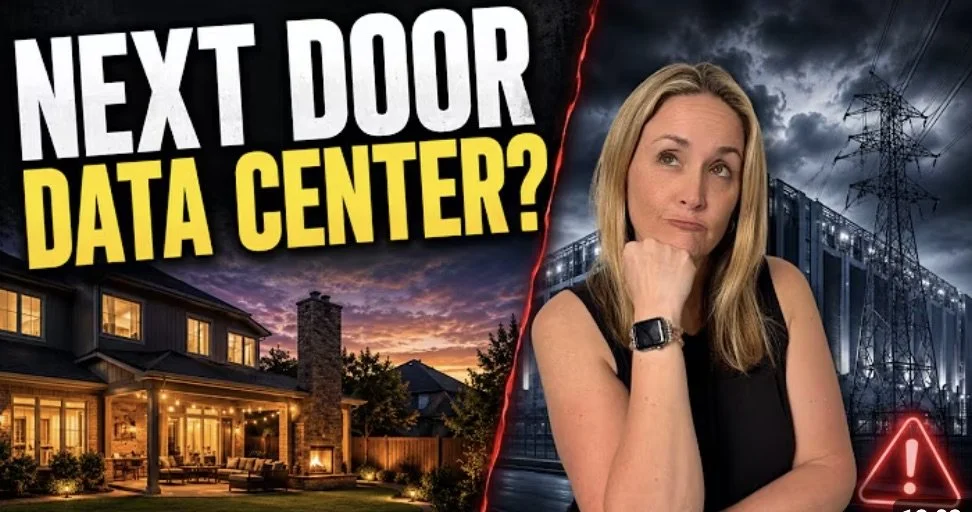
Data centers aren't a reason to avoid buying in North Metro Atlanta, but they're now part of smart due diligence. Each county is handling them differently: Cherokee, Cobb, and Paulding have paused new data center approvals while they write rules, Forsyth already has zoning and noise standards, and North Fulton has little land left for large campuses. Before you make an offer, check the zoning, pending rezonings, and utility projects around the home, not just the lot itself.
Could a data center be coming next door to a home in North Metro Atlanta?
It's possible, but it depends heavily on the county, the city, and the land around the property. Georgia has become one of the fastest-growing data center markets in the country, and several metro Atlanta counties have paused new approvals in 2026 to write rules for them. That isn't a reason to panic. It's a reason to ask one more question before you buy: what's planned around this property over the next five to ten years?
Key Takeaways
- Data centers are the "warehouses" of the internet, and demand for them is growing with AI, cloud computing, and streaming. Georgia attracts them because of affordable power, strong fiber networks, available land, and location.
- The biggest impact on a home often isn't the building itself. It's the transmission lines, utility upgrades, construction traffic, and future industrial development that come with it.
- Cherokee, Cobb, and Paulding counties all paused new data center approvals in 2026 while they update their rules. Forsyth County already has data center zoning and noise standards in place.
- North Fulton cities like Alpharetta, Milton, and Roswell have limited land and tight controls, so large data center campuses are less likely there.
- Before you make an offer, check the surrounding zoning, pending rezoning requests, and planned utility or transmission projects, and drive the area more than once.
What is a data center, and why are they coming to Georgia?
Think of a data center as the internet's warehouse. Every time you stream a show, upload photos to the cloud, use AI, shop online, or watch a YouTube video, that request is processed inside a building filled with thousands of computer servers. As AI, cloud computing, and streaming keep growing, so does the demand for these buildings.
Georgia has become one of the fastest-growing data center markets in the country. Affordable power, a strong fiber network, available land, and our location make the state attractive to major technology companies.
A year ago, almost none of our buyers asked about data centers. Now it's part of the conversation, and it's become one of the newest pieces of due diligence we discuss with buyers.
How can a data center affect a home nearby?
This isn't about saying data centers are good or bad. They're part of modern life. They create jobs, generate tax revenue, and support technology we all use every day. But like any large development, they can affect the area around them. Depending on where they're located, they can bring:
- Additional infrastructure and utility upgrades
- New high-voltage transmission lines
- Construction traffic
- Different land use nearby
- In some cases, changes in buyer perception when it's time to resell
Notice the word can. Every project is different. Location matters, distance matters, and how the project is designed matters.
One of the biggest misconceptions is that you have to live next door to a data center for it to affect you. Sometimes the biggest impact is everything needed to support it: power infrastructure, transmission lines, and future industrial development. That's why, when we help someone buy a home, we look beyond the property itself. Areas grow and change, and smart buyers look at what's planned, not just what exists today.
How are North Metro Atlanta counties handling data centers?
Some communities across Georgia have paused or slowed data center approvals while they study water use, noise, traffic, and infrastructure. That tells us local governments aren't treating this as business as usual. They're asking questions too.
Rules can differ even within the same county, so learn about the specific city you're considering, not just the county. Here's where things stand in the areas we serve, as of October 2026:
| Area | Where things stand | What to check |
|---|---|---|
| Cherokee County | Temporary moratorium approved in July 2026 while the county writes its first data center ordinance | Land near utility corridors, industrial zones, and I-575 |
| Forsyth County | Zoning and noise standards for data centers already adopted | Zoning around the property |
| North Fulton | Limited land and tight controls; projects reviewed case by case with conditions | Office and commercial parcels nearby |
| Cobb County | Moratorium extended in August 2026 to February 24, 2027, while code changes are written | City council and planning agendas |
| Paulding County | Moratorium through January 1, 2027, after concerns over technology park overlay districts | Zoning maps and overlay districts |
| Pickens, Gilmer, Dawson | Not major data center markets today | Future land use and transmission plans near acreage |
Cherokee County
This is where we spend most of our time. Cherokee hasn't seen the same level of data center activity as areas south of Atlanta, but it's on developers' radar because it still has available land, strong utility infrastructure, and good access to I-575. In July 2026, county commissioners approved a temporary moratorium on data center development so the county can write its first data center ordinance. Officials said there were no pending data center applications at the time.
So far, the conversation has centered on industrial corridors, not existing residential neighborhoods. If you own large acreage near major utility corridors or commercial zones, it's worth watching over the next several years. For buyers looking in Canton or Woodstock, this shouldn't scare you away. It just means asking one more question during due diligence. If you're buying land, our guide to buying land in Cherokee and Forsyth counties covers what else to check.
Forsyth County
Forsyth is one of the counties that impressed us most. Instead of waiting for applications, the county adopted zoning and noise limits for data centers, regulating where they can be built and how they're designed. That's a sign of proactive planning. If you're buying in Cumming or anywhere in Forsyth County, we see it as a positive. It doesn't mean data centers won't come; it means there are rules in place to manage them.
North Fulton
Alpharetta, Milton, Roswell, and Sandy Springs are already highly developed. Land is limited, and these cities place tight controls on where larger industrial projects can go. Alpharetta reviews data center projects case by case: in October 2026, its planning commission approved an expansion of an existing data center with 29 conditions covering landscaping, screening, noise testing, and tree protection. Because of the limited land, we don't expect North Fulton to become a hot spot for large data center campuses.
Cobb County
Cobb has seen some of the most public conversations about data centers in metro Atlanta. Several proposals drew significant pushback from residents, and in August 2026 the county extended its moratorium on new data center applications to February 24, 2027, while it updates its code. That tells us homeowners are engaged and local leaders are asking hard questions. If you're buying in East Cobb, West Cobb, or Marietta near commercial or industrial areas, check city council agendas and planning department updates.
Paulding County
Paulding is the county where we'd encourage buyers to pay the closest attention, not because data centers are everywhere, but because the county is still growing quickly. Residents raised concerns about technology park overlay districts created through code amendments rather than the usual rezoning process, and in July 2026 the county approved a data center moratorium running through January 1, 2027. Whatever you think of the projects, transparency matters. If you're buying in Paulding, spend extra time on zoning maps and ask about pending development near the property.
Pickens, Gilmer, and Dawson counties
People moving to Jasper, Ellijay, Dawsonville, or the surrounding mountain areas usually want privacy, acreage, and a slower pace. These counties aren't major data center markets today. Could that change? Absolutely. But if you're buying five or ten acres there, the bigger question is future land use around you. Could neighboring farmland be developed? Could new transmission lines be planned years from now?
What should you ask before buying a home near possible future development?
We don't think buyers should be afraid of data centers. We think buyers should be informed. When you buy a home, you're not just buying the house. You're buying the future of the area around it. Here are the five questions we'd want answered:
- What's the current zoning around the property? Not just your lot, but the surrounding land too.
- Are there any pending rezoning requests nearby? Today's vacant land can become tomorrow's commercial or industrial development.
- Are major utility or transmission projects planned nearby? Check with the county and the local utility.
- If you're buying acreage, what are the future infrastructure plans? Ask about roads, utilities, and future land use maps.
- Have you driven the area more than once? Visit during the day and in the evening, and drive the surrounding roads. Those extra 30 minutes can tell you more than any listing photos.
Ask these during your due diligence period, while you can still walk away. Here's how the due diligence period works in Georgia.
Should data centers stop you from buying in North Metro Atlanta?
Absolutely not. North Metro Atlanta remains one of the strongest places in the country to buy a home. People keep relocating here for the job market, the outdoor recreation, the lifestyle, and the economic growth. Ironically, the same growth attracting new residents is also attracting companies investing billions of dollars here.
Growth creates opportunity, and growth also means change. We're not telling you to avoid homes near future development. We're telling you to ask better questions. The more informed you are before closing, the fewer surprises you'll have afterward. If you're new to the area, start with our guide to finding your community in North Metro Atlanta.
Curious how we treat our clients? Read our reviews on Google and Zillow.
FAQ
Are data centers being built in Cherokee County, GA?
Not currently. In July 2026, Cherokee County approved a temporary moratorium on data center development while it writes its first data center ordinance, and officials said no data center applications were pending at the time. Land near utility corridors and I-575 is worth watching over the next several years.
Does Forsyth County have rules for data centers?
Yes. Forsyth County has adopted zoning and noise limits that regulate where data centers can be built and how they're designed. That doesn't rule out future projects, but it means rules are already in place to manage them.
Can a data center affect my home even if it isn't next door?
It can. The supporting infrastructure, such as high-voltage transmission lines, utility upgrades, construction traffic, and related industrial development, can reach well beyond the data center site. That's why it's worth checking planned utility projects near a home, not just the parcel next door.
How do I find out if development is planned near a home I'm buying?
Check the county or city zoning map, pending rezoning applications, planning commission and city council agendas, and any utility or transmission projects in the area. Do it during your due diligence period so you can still walk away if you find something you don't like.
Should I avoid buying a home near a future data center?
Not necessarily. Every project is different, and location, distance, and design all matter. The goal is to understand what's planned before you buy, so you can price it into your decision rather than discover it after closing.
Data centers are part of North Metro Atlanta's growth, and the buyers who look ahead make the best long-term decisions. Want help understanding what's planned around a home you're considering? Schedule a consultation and we'll look at the home, the area, and what could change around it, no pressure.
Equal Housing Opportunity. Greg Hart, GA License #379010; Jacquee Hart, GA License #406420; 1 Look Real Estate, regulated by the Georgia Real Estate Commission. This article is general information, not legal, tax, or financial advice. County and city policies change; verify current rules with the local planning department.
