
Hidden Costs of Homeownership in Georgia: Why Escrow Payments Are Rising for Homeowners
Why Are the Hidden Costs of Homeownership Rising in Georgia?
Hidden Costs of Homeownership in Georgia: Why Escrow Payments Are
The price of buying a home isn’t just the mortgage rate. In Georgia, many homeowners are seeing their monthly housing costs increase because of rising escrow payments tied to property taxes and homeowners insurance.
Recent research shows these “hidden costs of homeownership” are growing quickly, and they can significantly impact affordability for both current homeowners and buyers considering a move.
What Are the Hidden Costs of Homeownership?
When you buy a home, your monthly payment typically includes more than just the loan. Most mortgages include an escrow account, which collects money each month to pay expenses such as:
Property taxes
Homeowners insurance
Sometimes flood insurance or other assessments
Your lender holds these funds and pays the bills when they come due. The system is designed to simplify budgeting, but when taxes or insurance increase, your monthly mortgage payment can rise even if your interest rate never changes.
That’s why escrow is often referred to as one of the hidden costs of homeownership.
Georgia Has Seen a Major Increase in Escrow Costs
Recent research from housing analytics firm Cotality highlights just how quickly these costs are changing.
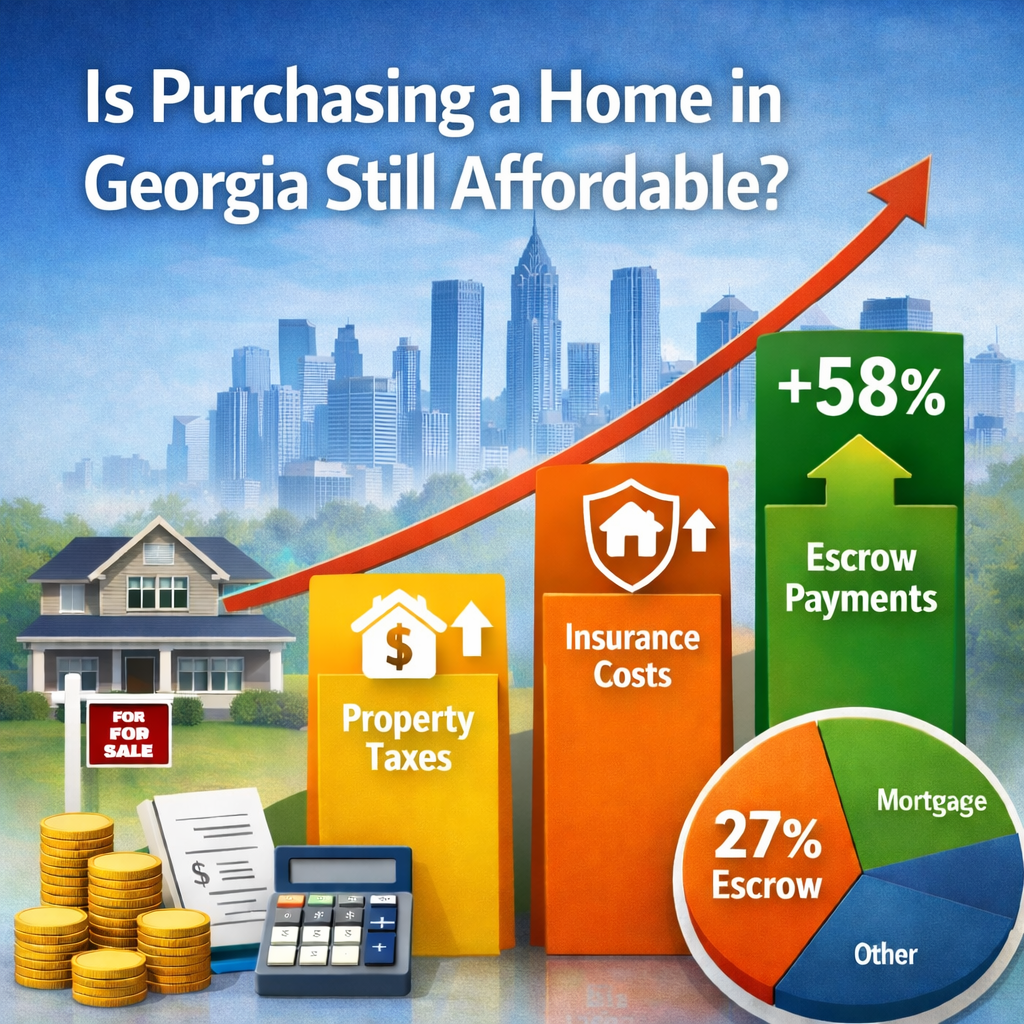
Between 2019 and 2025, the average escrow payment for Georgia homeowners increased by approximately 58%. That places Georgia among the states with some of the fastest-growing escrow costs during that time period.
By 2025, escrow payments accounted for about 27% of the typical monthly mortgage payment in Georgia, meaning more than one quarter of the payment goes toward taxes and insurance rather than the mortgage itself.
For homeowners who purchased several years ago, this increase can come as a surprise when their lender conducts the annual escrow review and adjusts the monthly payment.
Why Escrow Costs Are Increasing
Several factors are contributing to the rise in escrow-related expenses across Georgia and the United States.
Rising Property Taxes
Property taxes often increase when home values rise or when local governments adjust millage rates.
Georgia offers several homestead exemptions that can help reduce taxable value, but tax bills can still increase when assessed values grow with the market.
Recent legislation, including Georgia’s HB 581, introduced new frameworks for property tax calculations tied to inflation in some jurisdictions, but local governments may opt out. As a result, property tax trends can vary significantly from county to county.
Higher Homeowners Insurance Premiums
Insurance has become one of the fastest-growing housing expenses nationwide.
According to data compiled by the Insurance Information Institute using National Association of Insurance Commissioners data, homeowners insurance premiums have increased significantly in recent years, driven by:
Higher construction costs
Increased claim severity
Weather-related risks
Reinsurance market pressures
Georgia is also a major homeowners insurance market. NAIC data shows the state accounts for over 3% of the national homeowners insurance market, ranking among the top states for total premiums written.
As insurance premiums rise, lenders must collect more in escrow to cover those future bills.
The True Cost of Owning a Home
While mortgage rates often dominate headlines, the full cost of owning a home includes many ongoing expenses.
Research from Zillow estimates that the average U.S. homeowner spends nearly $16,000 per year on hidden homeownership costs, including:
Property taxes
Insurance
Maintenance and repairs
Utilities and other ongoing expenses
For buyers planning their budgets, this means the purchase price and mortgage rate are only part of the financial picture.
How Rising Escrow Costs Affect Homebuyers
Higher escrow payments can impact buyers in several ways.
Monthly Payment Affordability
Even if interest rates remain stable, increases in taxes and insurance can push total monthly payments higher than buyers expected.
This may affect:
Loan qualification limits
Debt-to-income ratios
Overall housing affordability
Budget Planning for First-Time Buyers
Many first-time buyers focus primarily on the mortgage payment estimate they receive during pre-approval.
But escrow adjustments after closing can change the monthly payment if taxes or insurance increase. Understanding these variables early helps avoid surprises.
Market Affordability Trends
According to research from the National Association of REALTORS®, the share of monthly housing costs attributed to escrow expenses has been increasing across many U.S. metro areas since 2019.
This shift means that even fixed-rate mortgages can feel less predictable, because the non-loan portion of the payment continues to change.
What Georgia Homeowners Should Watch Going Forward
While no one can predict exactly how taxes and insurance will change, there are several steps homeowners can take to stay ahead of rising costs.
Review Your Annual Escrow Statement
Mortgage lenders typically perform an annual escrow analysis. Reviewing this document helps you understand:
Changes in insurance premiums
Property tax adjustments
Whether your payment will increase or decrease
Monitor Insurance Coverage
Insurance premiums can vary between carriers and policy structures. Periodically reviewing coverage options may help homeowners ensure their policy still fits their needs and budget.
Understand Local Tax Changes
Property tax changes often occur at the local level. Monitoring county and city tax updates can help homeowners anticipate future increases.
The Bottom Line
The hidden costs of homeownership are becoming a bigger part of the housing affordability conversation.
In Georgia, rising property taxes and homeowners insurance premiums are increasing escrow payments for many homeowners. These costs don’t always get the same attention as mortgage rates, but they can significantly affect the total monthly payment.
For both buyers and current homeowners, understanding how escrow works, and how taxes and insurance influence your housing budget, can help you plan more confidently for the long term.
Frequently Asked Questions
What are the hidden costs of homeownership?
Hidden costs typically include property taxes, homeowners insurance, maintenance, utilities, and repairs. These expenses are often overlooked when buyers focus primarily on the mortgage payment.
What is an escrow account in a mortgage?
An escrow account is a separate account managed by your lender. Each month, part of your mortgage payment is set aside to pay property taxes and homeowners insurance when they are due.
Why do escrow payments increase?
Escrow payments increase when property taxes or insurance premiums rise. Lenders adjust monthly payments to ensure enough money is collected to cover those bills.
Can homeowners reduce escrow payments?
Homeowners may be able to reduce escrow costs by reviewing insurance coverage, appealing property tax assessments when appropriate, or qualifying for homestead exemptions.
Are escrow payments required for every mortgage?
Not always. Many lenders require escrow accounts, particularly for loans with smaller down payments. However, some borrowers with significant equity may be able to waive escrow requirements.
How can buyers plan for rising housing costs?
Buyers should budget beyond the mortgage payment and consider potential increases in taxes, insurance, and maintenance when determining what home price fits their financial goals.
Sources & Attribution
Cotality Housing Insights – Escrow Share Analysis
National Association of REALTORS® Housing Affordability and Escrow Research
Georgia Department of Revenue – Property Tax and Homestead Exemptions
Insurance Information Institute (III) and National Association of Insurance Commissioners (NAIC) homeowners insurance data
Zillow Housing Research on hidden costs of homeownership
Let’s Talk About Your Real Estate Strategy
Let’s talk about your unique situation. We’re Greg and Jacquee Hart with Hart Realty Partners, your trusted real estate advisors serving North metro Atlanta and across Georgia. Whether you prefer a call, text, DM, or email, reach out in the way that works best for you, and let’s create a strategy tailored to your goals.