Overpriced vs. Market-Rate: How Sharp Pricing Wins in North Metro Atlanta’s 2026 Balanced Market
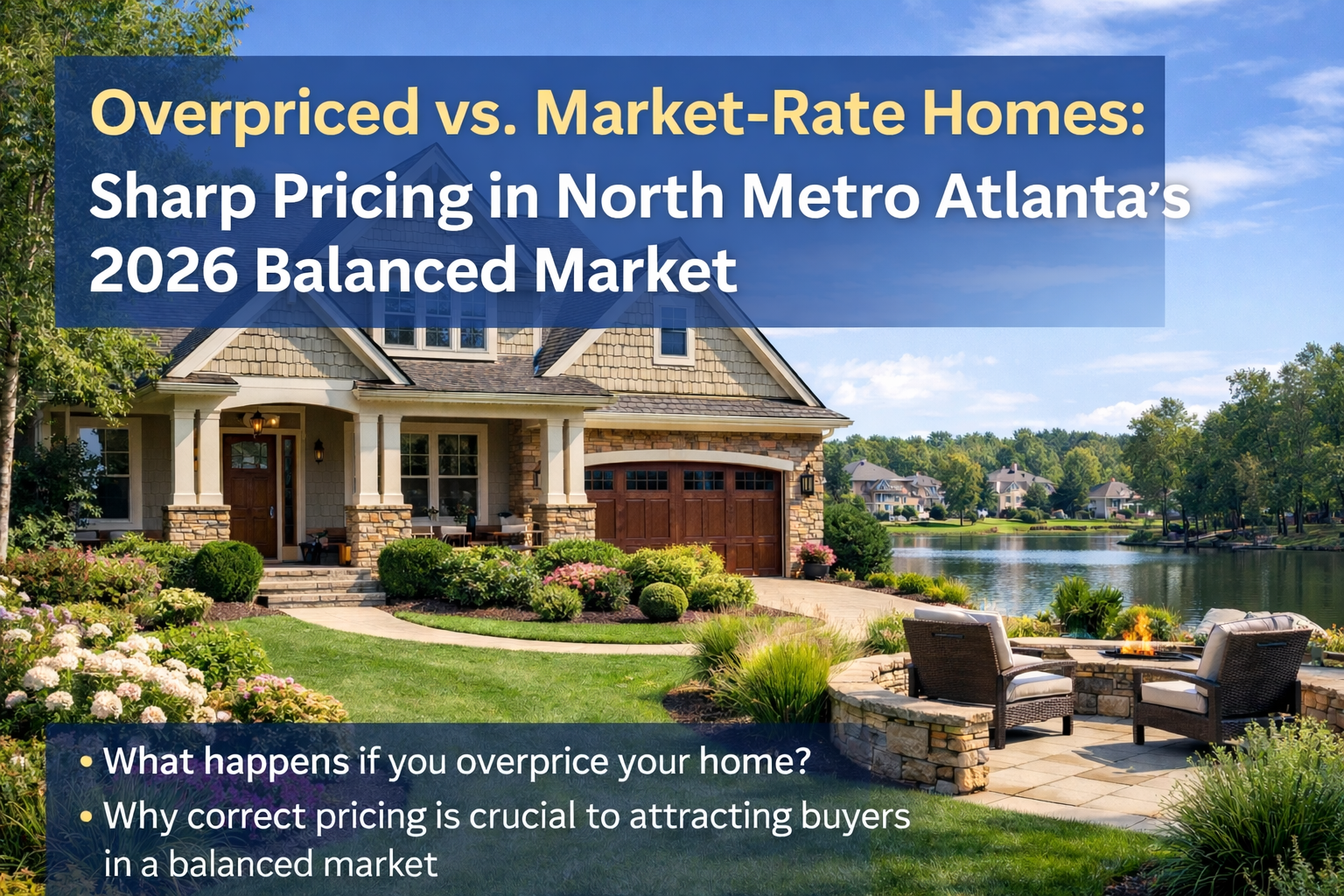
What happens if you overprice your home in North Metro Atlanta’s 2026 balanced market?
Overpricing can lead to longer days on market, fewer offers, and a lower final sale price, while homes priced at market value are more likely to attract serious buyers and sell efficiently.
In a balanced market like North Metro Atlanta in 2026, pricing accuracy matters more than ever. With buyers and sellers on more equal footing, your pricing strategy becomes the deciding factor between momentum and missed opportunity. If you’re planning to sell, understanding how sharp pricing works, and why overpricing backfires is essential.
Why Overpricing Backfires in a Balanced Market
It’s tempting to price high “just to see what happens” or to leave room for negotiation. But in a balanced market, that strategy often works against you.
Here’s why overpricing creates problems:
Longer time on market
Homes priced above market value tend to sit longer. As days on market increase, buyer perception shifts, and the home can appear undesirable—even if nothing is actually wrong with it.Reduced buyer interest
Today’s buyers are well-informed. They compare listings quickly, and overpriced homes are often dismissed before a showing is even scheduled.Lower final sale price
Properties that require multiple price reductions frequently sell for less than they would have if priced correctly from the start. Price cuts create a stigma that can weaken negotiating power.
In a balanced market, you don’t have the cushion that a strong seller’s market provides. Accurate pricing from day one is critical to attracting attention and preserving leverage.
What Market-Rate Pricing Really Means
Market-rate pricing isn’t about guessing, it’s about alignment. Your price should reflect current conditions and how buyers are behaving right now, not what the market looked like a year ago.
Key components of market-rate pricing include:
Comparative Market Analysis (CMA)
Reviewing recent sales of similar homes in size, condition, and location helps establish a realistic price range that buyers are already accepting.Current market trends
Metrics like average days on market, inventory levels, and buyer demand directly influence where your home should be priced.Emotional detachment
Buyers value your home based on data, not memories. Pricing decisions need to be grounded in market reality, not personal attachment.
When your home is priced at market value, it’s more likely to generate early interest, stronger showings, and in some cases, competing offers, even in a balanced environment.
How to Leverage a Balanced Market to Your Advantage
A balanced market isn’t a disadvantage, it simply requires a smarter approach.
Here’s how sharp pricing works in your favor:
Attract serious buyers
Correct pricing draws buyers who are prepared to act, rather than casual lookers hoping for a discount.Let your home’s strengths shine
When price isn’t a barrier, features like layout, condition, and updates become deciding factors.Maximize presentation and marketing
Professional photography, staging, and strategic marketing matter more when buyers have options. A well-priced, well-presented home stands out.
In a balanced market, success comes from precision, not excess.
Practical Steps to Ensure Sharp Pricing
If you want to avoid overpricing and protect your bottom line, focus on these steps:
Work with a local real estate expert
Local market knowledge is essential when conditions are neither strongly favoring buyers nor sellers.Monitor market shifts closely
Balanced markets can change quickly. Staying flexible allows you to adjust before momentum is lost.Listen to buyer feedback
Consistent comments about price are data points, not opinions. Ignoring them can cost you valuable time.
Sharp pricing is not a one-time decision; it’s an ongoing strategy.
Frequently Asked Questions
What should you do if your home isn’t selling?
Reevaluate your pricing strategy. Compare your home to current listings and recent sales, review buyer feedback, and consult a real estate professional to identify adjustments.
How do you determine the right price for your home?
A Comparative Market Analysis (CMA), paired with an understanding of current market trends and buyer behavior, provides the most reliable pricing guidance.
Is it worth making improvements before selling?
Yes—when done strategically. Focus on cost-effective updates that improve presentation, such as kitchens, bathrooms, and curb appeal.
Final Takeaway
In North Metro Atlanta’s 2026 balanced market, pricing isn’t just a number, it’s a strategy. Overpricing can quietly erode your leverage, while market-rate pricing positions your home to attract serious buyers and sell on stronger terms. When you align your price with current conditions and remain flexible, you give yourself the best chance for a successful outcome.
Call to Action
Let’s talk about your unique situation. We’re Greg and Jacquee Hart with Hart Realty Partners, your trusted real estate advisors serving North metro Atlanta and across Georgia. Whether you prefer a call, text, DM, or email, reach out in the way that works best for you, and let’s create a strategy tailored to your goals.