Open vs Closed Floor Plans in 2026: What Homebuyers Actually Want Now
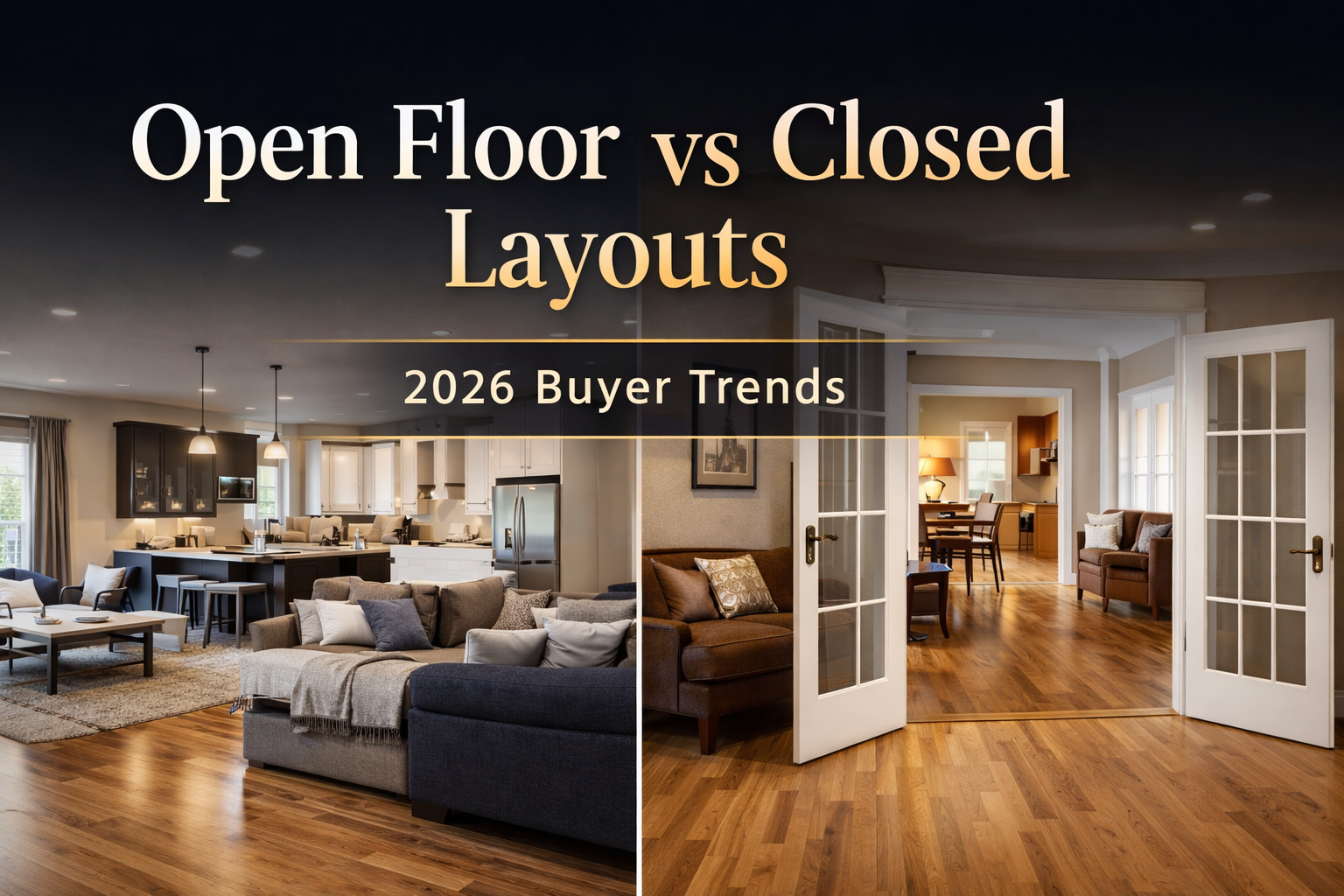
Are Open Floor Plans Still Popular in 2026, or Are Closed Layouts Making a Comeback?
For nearly two decades, open floor plans dominated new construction and home renovations. Large kitchens flowing into living areas became the hallmark of modern homes.
But in 2026, buyer preferences are shifting. Many homebuyers still enjoy open spaces, yet there is growing interest in homes with defined rooms, flexible layouts, and more privacy. Understanding this trend can help you evaluate homes differently, whether you're buying or preparing to sell.
Why Open Floor Plans Became So Popular
Open layouts rose to prominence in the early 2000s and quickly became one of the most requested home features. By removing walls between the kitchen, dining room, and living room, homes felt larger, brighter, and more social.
For buyers, the appeal was clear:
Better natural light throughout the home
Easier entertaining and hosting
Clear sightlines between spaces
A sense of openness, even in smaller homes
Builders embraced this design because it made homes feel spacious without necessarily increasing square footage. The kitchen also became the centerpiece of the home, connecting cooking, gathering, and entertaining in one area.
Even today, open floor plans remain very popular. Surveys from mortgage and housing platforms show that many buyers still prefer open layouts for entertaining and daily living.
However, the conversation around home design is evolving.
Why Some Buyers Are Reconsidering Fully Open Layouts
While open layouts are still desirable, homeowners who have lived with them for years have started noticing a few trade-offs.
As lifestyles have changed, especially with remote work and multigenerational living, buyers are beginning to value privacy and functional separation between spaces.
Here are several reasons this shift is happening.
1. Remote Work Increased the Need for Privacy
One of the biggest factors influencing home design trends is the rise of working from home.
A completely open layout can make it difficult to find a quiet place for video calls, focused work, or virtual meetings. As a result, many buyers are prioritizing homes with:
Dedicated offices
Flex rooms
Separate dens or libraries
Instead of removing walls, some homeowners are now adding them back or creating designated work areas that allow them to separate professional and personal life.
2. Defined Rooms Help Reduce Visual Clutter
Open concept homes connect multiple living areas together, which means everything is visible at once.
While this can feel airy and inviting, it can also make daily clutter harder to hide. Dishes in the kitchen, toys in the living room, or paperwork on a table all become part of the same visual space.
Defined rooms allow homeowners to contain activity within certain areas of the house. Many buyers appreciate the ability to close a door and keep certain spaces out of view when entertaining or relaxing.
3. Homes Now Serve More Purposes
Modern homes are no longer used only for living and sleeping. Today’s buyers often want their homes to accommodate multiple activities, such as:
Home offices
Fitness or yoga rooms
Hobby or craft spaces
Study areas for children
A floor plan with more separation makes it easier to dedicate rooms to specific purposes without constantly rearranging furniture or transforming spaces throughout the day.
4. Energy Efficiency Can Improve with Smaller Rooms
Heating and cooling large open areas can sometimes require more energy compared to managing smaller enclosed spaces.
Defined rooms allow homeowners to better control temperature zones throughout the house. With rising utility costs becoming a concern for many buyers, this practical consideration is influencing design preferences.
5. Noise Control Matters More Than People Realized
Sound travels easily in open layouts.
This can become challenging in households where multiple people are working, studying, or relaxing at the same time. Televisions, conversations, pets, and kitchen activity can quickly blend together.
Rooms with doors or partial separation naturally reduce noise levels, which is another reason some buyers are leaning toward more structured layouts.
The Rise of the “Hybrid” Floor Plan
Instead of choosing between fully open or completely closed homes, many builders and designers are now creating hybrid layouts.
These floor plans combine openness with flexibility. For example:
Kitchens that open to living areas but maintain a separate dining room
Sliding doors or pocket doors between spaces
Flex rooms that can serve as offices or guest rooms
Partial walls or architectural dividers
This design approach allows homeowners to enjoy the social benefits of open living while still having the option for privacy when needed.
What This Trend Means for Buyers
If you’re shopping for a home in 2026, it helps to think beyond trends and focus on how a layout supports your lifestyle.
Ask yourself questions like:
Do you work from home regularly?
Do you need quiet areas for calls or focused work?
Do you entertain often?
Would defined spaces make daily routines easier?
There isn’t a single “right” layout anymore. Instead, buyers are prioritizing flexibility and functionality.
What This Trend Means for Sellers
If you own a home with a more traditional layout, this design shift could actually work in your favor.
Homes that once felt dated because they had separate rooms may now appeal to buyers looking for privacy or flexible spaces.
Simple improvements can also highlight the value of defined layouts, such as:
Staging a spare bedroom as a home office
Showing how a dining room could double as a workspace
Adding doors or room dividers to create separation
Instead of competing directly with open concept homes, these properties can now be marketed as functional, adaptable living spaces.
The Bottom Line: Are Open Floor Plans Going Away?
Not at all.
Open layouts remain extremely popular and will likely continue to be a major part of home design. However, buyers today are placing more importance on balance.
Instead of removing every wall, many homeowners want a layout that offers:
connection between main living areas
flexible spaces for work and hobbies
privacy when needed
The future of home design isn’t strictly open or closed, it’s adaptable.
Understanding these evolving preferences can help you make smarter decisions, whether you're purchasing a home or preparing to sell one.
Frequently Asked Questions
Are open floor plans still popular in 2026?
Yes. Open layouts remain one of the most common designs in modern homes. However, many buyers now prefer a balance between open living areas and separate functional rooms.
Why are some buyers moving away from fully open layouts?
Lifestyle changes such as remote work, multigenerational living, and the need for quiet spaces have increased demand for homes with more defined rooms.
Are closed floor plans coming back?
Rather than a full return to traditional layouts, many builders are creating hybrid designs that combine open spaces with flexible rooms and privacy options.
Do open floor plans increase home value?
Open layouts can still add value, especially for entertaining and natural light. However, buyers today are placing more importance on how well a home’s layout supports everyday living.
What is a hybrid floor plan?
A hybrid floor plan blends open living areas with defined rooms or flexible spaces. This approach allows homeowners to enjoy openness while still having privacy when needed.
Should sellers renovate to create an open floor plan?
Not necessarily. Many buyers now appreciate homes with functional separation. Instead of removing walls, sellers can focus on highlighting how existing spaces can be used.
Sources
Rocket Mortgage Housing Preference Survey
National Association of Home Builders design trend reports
Frontiers in Psychology research on home acoustic environments
Residential architecture trend analysis from housing design publications
Call to Action
Let’s talk about your unique situation. We’re Greg and Jacquee Hart with Hart Realty Partners, your trusted real estate advisors serving North metro Atlanta and across Georgia. Whether you prefer a call, text, DM, or email, reach out in the way that works best for you, and let’s create a strategy tailored to your goals.